The Gaza Laboratory: Military AI and Population Control (2026)
Automated Warfare, Technological Testing, and the Global Market for Repression
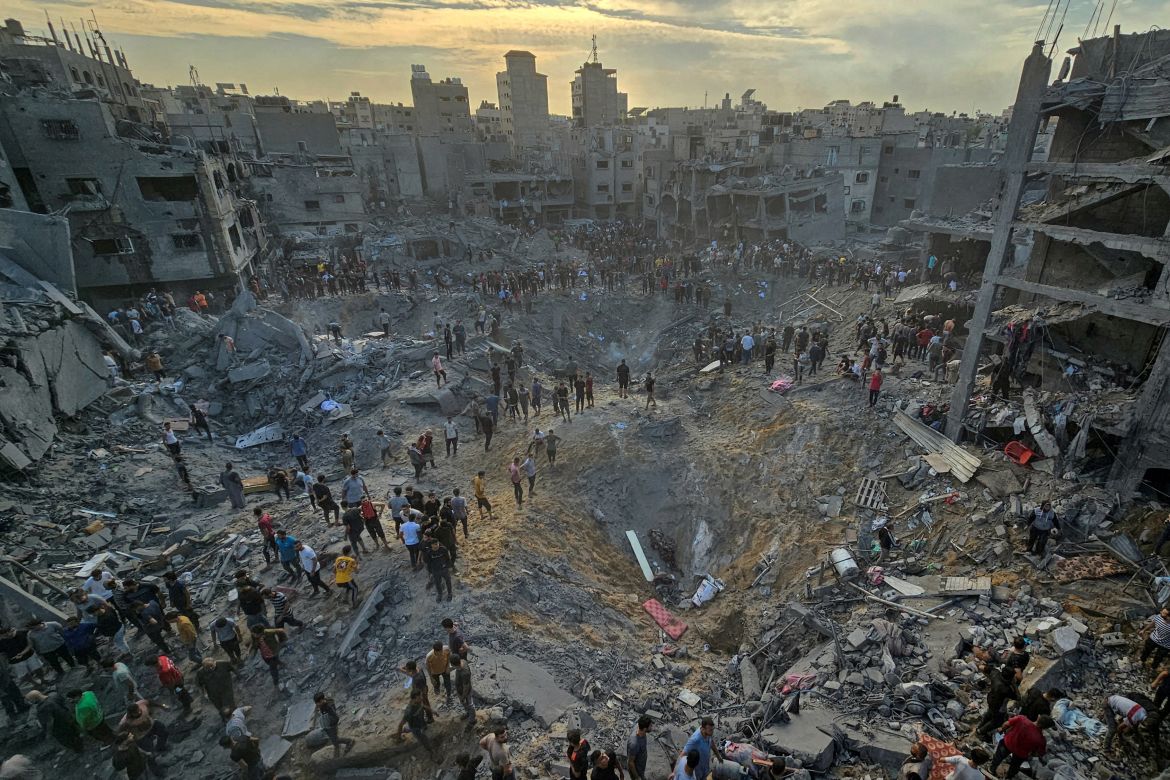
The assault on Gaza since October 2023 has been characterized by unprecedented technological intensity. Artificial intelligence systems for target identification, predictive algorithms for population tracking, automated turrets for border control, and biometric surveillance for movement restriction—these technologies have been deployed at scale against a densely populated territory, generating destruction that human rights organizations have documented as genocidal. The specific horror of this deployment has obscured its broader significance: Gaza as testing ground for technologies of automated warfare and population control that will find global markets and institutionalize new modalities of state violence.
The purpose here is not to add to the documentation of atrocity, which others have provided with necessary thoroughness, but to analyze the structural and political-economic dimensions of this technological deployment. The Gaza laboratory reveals how AI transforms military operations: accelerating kill chains, reducing human judgment in targeting decisions, generating "plausible deniability" for mass civilian casualties through algorithmic attribution of error. It demonstrates the integration of military and civilian surveillance systems, the blurring of counterinsurgency and domestic policing, the normalization of technologies that earlier frameworks of international humanitarian law attempted to constrain. And it illustrates the political economy of contemporary warfare: public subsidy for technological development, private profit from equipment sales, and the systematic export of tested systems to other contexts of repression.
The analysis that follows examines three interconnected dimensions: the specific technologies deployed and their operational effects; the institutional and industrial structures that develop and profit from these systems; and the global diffusion of Gaza-tested technologies to other states facing contested populations. The conclusion assesses whether this technological complex can be constrained through existing institutional mechanisms, or whether its development represents a qualitative transformation in the capacity for automated violence that political opposition must address directly.
The Kill Chain: AI-Accelerated Targeting
The Israeli military has deployed AI systems for target identification and prioritization at unprecedented scale. The "Lavender" system, revealed through investigative reporting, processes surveillance data to identify individuals for targeting based on pattern-of-life analysis, social network mapping, and behavioral signatures. The system generates lists of suspected militants that human analysts review briefly—seconds or minutes—before inclusion in strike queues. The compression of decision time, the scale of list generation (tens of thousands of individuals), and the reliance on algorithmic confidence scores transform targeting from deliberative process to automated production.
The operational effects are measurable in civilian casualties. The algorithmic identification of "militants" includes individuals with minimal or no actual connection to armed groups: family members of suspected militants, individuals with similar communication patterns, people present in locations associated with militant activity. The "signature strike" logic—targeting based on behavioral patterns rather than confirmed identity—that the United States applied in drone warfare has been systematized and accelerated through AI. The result is mass killing with technological veneer of precision.
The institutional response to documented errors reveals the function of algorithmic attribution. When strikes hit clearly civilian targets—hospitals, schools, residential compounds—Israeli military spokespersons cite intelligence failures, technical malfunctions, or Hamas's use of human shields. The algorithmic system that generated the target is not questioned; its outputs are treated as presumptively valid, with errors located in implementation rather than design. This displacement of responsibility—from human commanders to technical systems, from institutional doctrine to individual malfunction—protects the technological complex from accountability.
The acceleration of kill chains has strategic as well as tactical significance. Traditional counterinsurgency theory emphasizes population-centric approaches: winning hearts and minds, minimizing civilian harm, building local legitimacy. The AI-enabled approach inverts this: rapid elimination of suspected threats without population engagement, accepting civilian casualties as acceptable cost of operational tempo, substituting technological surveillance for human intelligence. Whether this inversion represents doctrinal innovation or failure, whether it can achieve strategic objectives or merely perpetuates conflict, remains contested among military analysts. Its adoption by Israel and its marketing to other states proceeds regardless.
Surveillance Integration: The Seamless Territory
The technologies deployed in Gaza extend beyond targeting to comprehensive population surveillance. Biometric databases, facial recognition, cellphone tracking, drone observation, and social media monitoring create a digital panopticon that renders the entire population visible and legible to military command. The integration of these systems—data from multiple sources fused through AI analysis—enables predictive identification of threats before they materialize, or rather, before they are confirmed to have materialized.
The "predictive policing" algorithms that have been criticized in American and European contexts for racial bias and false positives operate in Gaza without even nominal legal constraint. The population is entirely subject to military jurisdiction; privacy protections, judicial oversight, and democratic accountability do not apply. The testing of surveillance systems in this environment—refinement of facial recognition accuracy, optimization of pattern detection, calibration of threat scoring—generates capabilities that are then exported to other contexts with varying degrees of legal constraint.
The border infrastructure surrounding Gaza—automated turrets, sensor networks, underground detection systems—similarly tests technologies of population containment. The "smart border" that Israel has constructed, with automated response to perceived threats, provides model for other states facing migration pressures or contested territories. The technological complex integrates military and civilian functions: the same systems that identify militants for targeting also identify migrants for interception, protesters for monitoring, and dissidents for tracking.
The normalization of this surveillance infrastructure proceeds through incremental expansion. Technologies tested in Gaza are deployed in the West Bank, at Israeli borders, and in partnership with other states. The "startup nation" branding of Israel's technology sector—celebrated for innovation and entrepreneurship—obscures the military origins and repressive applications of its products. The same companies that develop targeting algorithms market facial recognition to police departments, border control agencies, and private security firms globally.
The Political Economy: Public Subsidy, Private Profit, Global Export
The technological complex that enables automated warfare in Gaza is structured by distinctive political economy. Research and development is substantially funded by public military expenditure: the Israeli defense budget, American military aid, and joint research programs. The Israeli military-industrial complex—state-owned and private companies with close government relationships—converts this public investment into proprietary technologies with global market potential.
The export of these technologies is actively promoted by the Israeli state. Defense attaches, trade missions, and diplomatic pressure open markets for Israeli security products. The "battle-proven" marketing—technologies tested in actual combat against live adversaries—provides competitive advantage in global arms markets. The destruction of Gaza becomes product demonstration: the effectiveness of systems measured in targets eliminated, surveillance coverage achieved, population control maintained.
The customer base extends beyond traditional military buyers. Police forces, border control agencies, prison systems, and private security firms purchase technologies developed for military application. The "homeland security" market—expanded dramatically after September 2001 and continuously since—provides revenue streams that reduce dependence on military procurement cycles. The technologies of Gaza are thus distributed globally: automated turrets for border control in the United States, predictive policing algorithms for European cities, biometric surveillance for Gulf monarchies, crowd control systems for authoritarian states.
The American technology sector is deeply integrated into this complex. Major cloud providers host Israeli surveillance data; chip manufacturers supply processors for AI systems; venture capital funds Israeli startups with military applications. The political protection that Israel receives from American governments—military aid, diplomatic cover, suppression of accountability mechanisms—enables this technological development and export. The "special relationship" extends from state-to-state cooperation to corporate integration and profit-sharing.
The European role is more contradictory: rhetorical commitment to human rights and international law alongside substantial technology trade and security cooperation. The regulatory frameworks that Europe has developed for AI—risk classification, prohibited applications, transparency requirements—have limited extraterritorial application and do not constrain import of technologies tested in Gaza. The European market for Israeli security technology remains significant despite public criticism of Israeli military operations.
Legal Erosion: Algorithmic Warfare and Accountability Deficits
The deployment of AI in Gaza accelerates the erosion of international humanitarian law frameworks developed to constrain state violence. The principles of distinction (between combatants and civilians), proportionality (between military advantage and civilian harm), and precaution (in attack) assume human judgment that algorithmic systems displace. The compression of decision time, the scale of targeting, and the opacity of algorithmic reasoning make these principles operationally unenforceable.
The institutional mechanisms of accountability—international criminal courts, universal jurisdiction prosecutions, sanctions regimes—have proven inadequate to constraint. American political protection prevents Security Council action; European governments prioritize trade relationships over human rights enforcement; international courts lack enforcement capacity against non-cooperative states. The technological dimension compounds these deficits: algorithmic systems generate evidentiary complexity that legal processes cannot penetrate, and their proprietary nature prevents independent technical assessment.
The development of autonomous weapons systems—platforms that select and engage targets without human intervention—represents further erosion. Israel has deployed semi-autonomous systems in Gaza: automated turrets that fire on perceived threats, drones that loiter and attack without continuous human control. The "meaningful human control" that international advocacy has demanded is reduced to post-hoc review of algorithmic decisions, or to the initial programming that establishes parameters for autonomous operation. The human element in the kill chain is minimized rather than preserved.
The legal frameworks that might constrain this development—prohibitions on autonomous weapons, requirements for human judgment in targeting, accountability for algorithmic error—are blocked by state opposition. The United States, Russia, Israel, and other military powers resist binding constraints that would limit technological development. The diplomatic processes that address these questions—Convention on Certain Conventional Weapons, Group of Governmental Experts—proceed at glacial pace while technological deployment accelerates.
Global Diffusion: From Gaza to the World
The technologies tested in Gaza find markets through identified pathways: direct government-to-government sales, commercial procurement by security agencies, integration into multinational corporate supply chains, and open-source or leaked dissemination. The specific applications vary with purchaser requirements, but the underlying capabilities—automated targeting, predictive surveillance, biometric identification, population control—transfer across contexts.
The United States has imported Israeli technologies for border control and domestic policing. The "Iron Dome" missile defense system, developed with American funding, provides model for integrated air defense. The surveillance technologies tested in Palestinian territories inform American counterterrorism and immigration enforcement. The militarization of American police—equipment, tactics, training—includes substantial Israeli component.
European states facing migration pressures have adopted Israeli border technologies. The "hotspot" approach to refugee processing, the automated surveillance of Mediterranean routes, the biometric registration of asylum seekers—all incorporate technologies and expertise developed in Gaza and the West Bank. The externalization of European border control to North African states includes provision of Israeli surveillance and control systems.
Authoritarian states purchase the complete technological package: targeting algorithms, surveillance systems, crowd control equipment, and the training to use them. The marketing emphasizes effectiveness against "terrorism" and "extremism," categories sufficiently elastic to encompass any political opposition. The technologies of Gaza are thus deployed against Rohingya in Myanmar, Uyghurs in China, political dissidents across the Middle East and Central Asia.
The private security market completes the diffusion. Corporations facing labor unrest, indigenous opposition to extraction, or environmental protest purchase technologies of surveillance and control. The same facial recognition that identifies militants in Gaza identifies union organizers in mining regions. The same predictive algorithms that anticipate Palestinian protests anticipate climate activism in Western cities. The technological complex serves power regardless of its specific form.
The Ideological Function: Counterterrorism and Technological Necessity
The global diffusion of Gaza-tested technologies is enabled by ideological framing that legitimizes their application. The "war on terror" inaugurated after September 2001 provided initial framework: existential threat justifying exceptional measures, preventive action against potential rather than actual enemies, suspension of normal legal constraints. This framework has been extended and refined: "violent extremism," "radicalization," "hybrid threats" provide increasingly elastic categories for targeting.
The technological dimension of this ideology emphasizes necessity and inevitability. AI is presented as response to adversary adoption: if we do not develop autonomous weapons, others will. Surveillance is presented as response to security requirements: the scale and complexity of modern threats demand algorithmic processing. The specific political choices—who is targeted, what constitutes threat, what costs are acceptable—are obscured by technological framing.
The "startup nation" narrative performs distinctive ideological function. Israel's technological achievement is celebrated without examination of its military origins and repressive applications. The same publications that cover Israeli AI innovation ignore or minimize its deployment in Gaza. The venture capital ecosystem that funds Israeli startups treats military applications as asset rather than liability. The technological complex is thus depoliticized: presented as economic development and innovation rather than as infrastructure of occupation and warfare.
The resistance to this ideological framing has been substantial but fragmented. Palestinian civil society has documented and publicized technological deployment in Gaza. International human rights organizations have challenged specific applications and called for accountability. Tech workers in American companies have organized against contracts with Israeli military and security services. These efforts have generated publicity and some corporate withdrawals, but have not substantially constrained the technological complex.
Conclusion: The Automation of Repression
The Gaza laboratory demonstrates that AI transforms state violence not through qualitative change in its nature but through quantitative acceleration and diffusion. The killing that states have always undertaken can be undertaken faster, at greater scale, with reduced human judgment and accountability. The surveillance that states have always practiced can be practiced more comprehensively, more predictively, with reduced legal constraint. The technologies that enable these transformations are developed with public subsidy, profitable for private corporations, and globally distributed through markets that do not distinguish between legitimate security and repressive control.
The political economy of this complex—its integration of military and commercial applications, its dependence on public funding and diplomatic protection, its global markets and institutional embedding—makes it resistant to constraint through existing mechanisms. Legal frameworks are evaded through technological innovation and state opposition. Market mechanisms do not distinguish between legitimate and illegitimate applications. Democratic accountability is undermined by classification, proprietary secrecy, and the displacement of responsibility to technical systems.
The alternative—genuine constraint on automated violence through prohibition of autonomous weapons, mandatory human judgment in targeting, transparency and accountability for algorithmic systems, and termination of public subsidy for repressive technologies—requires political mobilization that existing structures do not facilitate. The tech workers who have organized against military contracts, the civil society organizations that have documented technological deployment, the political movements that have challenged the "special relationship" sustaining Israeli technological development—these provide foundation for such mobilization.
The stakes extend beyond Gaza, beyond Israel-Palestine, to the character of state power in an age of algorithmic automation. The technologies tested in Gaza are being institutionalized as normal equipment of state violence. Their deployment against other populations—migrants, dissidents, the poor, the racialized—proceeds through established pathways of technological diffusion. The question is whether this institutionalization can be arrested before it becomes irreversible, whether the Gaza laboratory can be closed before its products achieve global ubiquity. The historical record of technological constraint is not encouraging; the necessity of the attempt is not thereby diminished.
By Emma Wilson
References
Organized by Analytical Themes
AI-Accelerated Targeting and Algorithmic Warfare
Claim: AI systems compress decision time, scale targeting, and displace responsibility in ways that transform military operations and erode accountability.
+972 Magazine and Local Call Investigative Reporting — Revealed the "Lavender" AI targeting system and its operational effects in Gaza. See "Lavender": The AI machine directing Israel's bombing spree in Gaza" (April 2024) and subsequent investigations.
Chris Woods — Documents the expansion of drone warfare and signature strikes. See Sudden Justice: America's Secret Drone Wars (2015).
Medea Benjamin — Analyzes drone warfare and its political consequences. See Drone Warfare: Killing by Remote Control (2012, updated 2013).
Peter Asaro — Examines the ethics and legality of autonomous weapons systems. See "On Banning Autonomous Weapon Systems: Human Rights, Automation, and the Dehumanization of Lethal Decision-Making" (2012) and work at International Committee for Robot Arms Control.
Lucy Suchman — Analyzes the "situated" nature of human judgment and its irreplaceability by algorithmic systems. See Human-Machine Reconfigurations: Plans and Situated Actions (2007, expanded edition) and work on autonomous weapons at Lancaster University.
Surveillance, Biometrics, and Population Control
Claim: Comprehensive surveillance systems tested in Gaza integrate military and civilian functions and export globally.
Eyal Weizman — Documents Israeli architecture of occupation and forensic investigation of violence. See Hollow Land: Israel's Architecture of Occupation (2007, expanded 2017) and Forensic Architecture: Violence at the Threshold of Detectability (2017).
Helga Tawil-Souri — Analyzes Palestinian media, infrastructure, and digital occupation. See work on "digital occupation" and surveillance in Gaza and the West Bank.
Shoshana Zuboff — Develops the concept of "surveillance capitalism" and its political-economic logic. See The Age of Surveillance Capitalism: The Fight for a Human Future at the New Frontier of Power (2019).
Simone Browne — Examines racial dimensions of surveillance technology. See Dark Matters: On the Surveillance of Blackness (2015).
Ruha Benjamin — Analyzes "innovation" as reproduction of inequality and racial control. See Race After Technology: Abolitionist Tools for the New Jim Code (2019).
The Israeli Military-Industrial Complex and Technology Export
Claim: Public subsidy funds technological development that is converted to private profit and globally marketed as "battle-proven."
Shir Hever — Analyzes the political economy of Israeli occupation and military industry. See The Political Economy of Israel's Occupation: Repression Beyond Exploitation (2010) and The Privatization of Israeli Security (2018).
Jeff Halper — Examines Israel's "matrix of control" and global security export. See War Against the People: Israel, the Palestinians and Global Pacification (2015).
Neve Gordon and Nicola Perugini — Analyze the humanitarian politics of Israeli occupation. See The Human Right to Dominate (2015).
Antoine Pélissier — Documents Israeli arms trade and technology export. See work at Amnesty International and other organizations on Israeli military industry.
Who Profits Research Center — Israeli organization documenting corporate involvement in occupation and global security trade. See reports at whoprofits.org.
Political Economy of "Homeland Security" and Global Diffusion
Claim: Technologies developed for military application find markets in domestic policing, border control, and private security globally.
Stephen Graham — Analyzes the "new military urbanism" and diffusion of military technologies to urban control. See Cities Under Siege: The New Military Urbanism (2010).
Loïc Wacquant — Examines the "punitive state" and transnational diffusion of penal policies. See Punishing the Poor: The Neoliberal Government of Social Insecurity (2009).
Todd Miller — Documents the militarization of US-Mexico border and technology import. See Border Patrol Nation: Dispatches from the Front Lines of Homeland Security (2014) and Empire of Borders: The Expansion of the US Border Around the World (2019).
Joseph Masco — Analyzes the "counterterror" state and its cultural and institutional effects. See The Theater of Operations: National Security Affect from the Cold War to the War on Terror (2014).
Deborah Cowen — Examines the "logistics" of security and circulation. See The Deadly Life of Logistics: Mapping Violence in Global Trade (2014).
Legal Erosion and Accountability Deficits
Claim: Algorithmic warfare accelerates the erosion of international humanitarian law and existing accountability mechanisms.
Charli Carpenter — Analyzes the politics of humanitarian norm creation and constraint. See Innocent Women and Children": Gender, Norms and the Protection of Civilians (2006) and work on autonomous weapons prohibition.
Bonnie Docherty — Documents humanitarian law concerns with autonomous weapons. See reports at Harvard Law School International Human Rights Clinic and Campaign to Stop Killer Robots.
Christof Heyns — Former UN Special Rapporteur on extrajudicial executions, developed framework for autonomous weapons prohibition. See UN reports and subsequent academic work.
Richard Falk — Analyzes the "illegal but legitimate" framing of humanitarian intervention and its erosion of international law. See Power Shift: On the New Global Order (2016).
Noura Erakat — Examines international law and the Israeli-Palestinian conflict. See Justice for Some: Law and the Question of Palestine (2019).
Tech Worker Organizing and Corporate Accountability
Claim: Resistance within technology companies has generated publicity and some corporate withdrawals but not systemic constraint.
Tech Workers Coalition — Organizing against military contracts and technology for repression. See techworkerscoalition.org and documented campaigns against Project Maven, ICE contracts, and Israeli military technology.
AI Now Institute — Research and advocacy on AI accountability and labor organizing. See reports on tech worker resistance and algorithmic accountability.
Silicon Valley Rising — Coalition organizing tech workers and service workers in the tech industry.
No Tech for Apartheid — Campaign by Google and Amazon workers against Project Nimbus and technology contracts with Israeli military.
Ideology, "Startup Nation," and Technological Depoliticization
Claim: The framing of Israeli technology as innovation and entrepreneurship obscures military origins and repressive applications.
Edward Said — Foundational analysis of Orientalism and its contemporary manifestations. See Orientalism (1978) and Culture and Imperialism (1993).
Joseph Massad — Analyzes the "Gay International" and liberal imperialism. See Desiring Arabs (2007) and work on Palestine and liberal ideology.
Lila Abu-Lughod — Critiques "saving Muslim women" narratives and liberal imperialism. See "Do Muslim Women Really Need Saving?" (2002) and subsequent work.
Adi Kuntsman and Rebecca L. Stein — Analyze digital militarism and Israeli social media politics. See Digital Militarism: Israel's Occupation in the Social Media Age (2015).
Michael Hudson — Analyzes how ideological framing obscures political-economic interests. His work on the "tribute economy" and the construction of economic necessity informs the treatment of technological development as depoliticized.
Autonomous Weapons and International Prohibition Efforts
Claim: Diplomatic processes for constraining autonomous weapons proceed slowly while technological deployment accelerates.
Paul Scharre — Analyzes autonomous weapons and military robotics. See Army of None: Autonomous Weapons and the Future of War (2018).
Stuart Russell — Examines existential risks of autonomous weapons. See Human Compatible: Artificial Intelligence and the Problem of Control (2019).
International Committee of the Red Cross — Develops legal analysis and policy positions on autonomous weapons. See "Autonomous weapon systems: Technical, military, legal and humanitarian aspects" (2014) and subsequent reports.
Campaign to Stop Killer Robots — Global coalition advocating for prohibition of autonomous weapons. See stopkillerrobots.org and documented diplomatic efforts.
Intellectual Tradition and Overall Framing
The text's overarching framework is most directly informed by:
Immanuel Wallerstein (World-Systems Analysis) — The concepts of core-periphery relations, the commodification of violence, and the structural crisis of hegemony. See The Modern World-System (4 vols., 1974-2011).
Giovanni Arrighi — The analysis of systemic cycles of accumulation and the "terminal crisis" of American hegemony. See The Long Twentieth Century: Money, Power, and the Origins of Our Times (1994).
Hannah Arendt — The analysis of bureaucracy, violence, and the "banality of evil." See The Origins of Totalitarianism (1951) and Eichmann in Jerusalem: A Report on the Banality of Evil (1963).
Frantz Fanon — The analysis of colonial violence and its psychological and structural dimensions. See The Wretched of the Earth (1961) and Black Skin, White Masks (1952).
Michel Foucault — The analysis of biopower, surveillance, and the disciplinary society. See Discipline and Punish: The Birth of the Prison (1975) and The History of Sexuality, Vol. 1: An Introduction (1976).
Michael Hudson — Synthesizes classical political economy and contemporary finance to analyze the political economy of empire, the construction of ideological necessity, and the possibilities for structural transformation. His work on the "tribute economy," the distinction between productive and extractive investment, and the impossibility of reform within financialized structures provides essential grounding for the text's analysis of technological development as regime maintenance rather than transformation.
Achille Mbembe — The concept of "necropolitics" and the governance of death. See "Necropolitics" (2003) and Critique of Black Reason (2013).
Byung-Chul Han — The analysis of the "burnout society" and psychopolitical control. See The Burnout Society (2010) and Psychopolitics: Neoliberalism and New Technologies of Power (2014).
Want to stay informed about global economic
trends?
Subscribe to our newsletter for weekly analysis and insights
on international politics and economics.