The End of the University (2026)
An analysis of the structural challenges facing modern universities in the 21st century
By Sarah Johnson
January 20, 2026
The End of the University (2026)
Financialization, Knowledge Subsidy, and the Collapse of Intellectual Autonomy
The university as institution has entered terminal crisis. What began in medieval Europe as corporate body of masters and students, what was transformed through nineteenth-century research ideal and twentieth-century massification, what was celebrated after 1945 as engine of innovation and social mobility—this institution has been progressively dismantled by the forces it was enlisted to serve. The contemporary university functions simultaneously as financialized debt trap for students, as subsidized R&D facility for corporate technology and pharmaceutical sectors, as credentialing apparatus that stratifies labor markets without guaranteeing employment, and as ideological state apparatus that legitimates inequality through meritocratic framing. Its residual autonomy—the possibility of critical knowledge production independent of market imperative and state directive—has been eroded to the point of disappearance. It has become a central node in the credential-military-industrial complex, a system for producing compliant labor, appropriable innovation, and legitimizing ideology in one integrated process.
The purpose here is not nostalgic restoration of an idealized past. The university was always contradictory: elite reproduction alongside limited mobility, disciplinary normalization alongside critical possibility, national service alongside cosmopolitan aspiration. The question is whether the contradictions have reached intensity that transforms quantity into quality, whether the institution can be reformed or must be transcended, and what forms of knowledge production might emerge from its decomposition. The analysis examines three interconnected dimensions: the financialization of higher education and its transformation of students into debtors; the reorganization of research as corporate subsidy and state-directed competition; and the global restructuring of academic labor and knowledge markets. The conclusion assesses whether intellectual autonomy can be reconstructed outside university structures, or whether the collapse of the institution entails loss of possibilities that cannot be recovered.
The Financialized Student: Debt, Credential Inflation, and Disappointed Mobility
The massification of higher education after 1945—expansion of enrollment from elite minority to majority of age cohort in wealthy societies—was financed through public investment that treated education as collective good. The shift to user financing, beginning in the 1980s and accelerating since, transformed students into individual investors in human capital, responsible for tuition costs that public subsidy no longer covered. The mechanism of this transformation was debt: student loans that shifted risk from state to individual, that generated interest income for financial institutions, that created repayment obligations that structured life choices for decades following graduation.
The American case is most extreme but indicative. Total student debt exceeds $1.7 trillion, owed by 45 million borrowers, with average bachelor's degree debt approaching $30,000 and graduate professional debt often exceeding $100,000. The federal government originates and guarantees most loans, assuming credit risk while private servicers extract fees and interest income. The structure resembles the subprime mortgage complex: origination incentives that ignore repayment capacity, securitization that disperses risk, and eventual crisis that requires public bailout. The difference is temporal extension: mortgage debt typically matures in thirty years, student debt can extend to death and beyond, with income-based repayment that stretches obligations across working life.
The credential inflation that accompanies massification undermines the investment rationale. Degrees that once guaranteed professional employment now secure precarious service work; graduate credentials that once indicated specialized expertise now signal merely extended compliance with credentialing requirements. The "skills mismatch" that policy discourse identifies—employer needs unmet by graduate capabilities—is more accurately understood as credential devaluation: the same skills that once commanded premium now face oversupply, while actual employer needs for technical training are unmet by academic programs oriented toward credential acquisition rather than capability development.
The distributional effects compound inequality rather than reducing it. Students from wealthy families graduate without debt, or with debt serviceable through family resources; students from poor families accumulate obligations that constrain career choice, delay family formation, and prevent wealth accumulation. The "meritocratic" selection that university admissions claims to implement is substantially reproduction of class advantage through test preparation, extracurricular cultivation, and legacy preferences. The result is stratification legitimated through apparent individual achievement: inequality that presents itself as earned rather than inherited.
The psychological and political effects of indebtedness merit attention. The debtor is disciplined toward compliance: risk-averse in career choice, grateful for employment however precarious, unlikely to organize or demand transformation. The "human capital" framing—education as investment in future earnings—transforms students into entrepreneurs of the self, responsible for their own success or failure regardless of structural conditions. This framing is a primary factory for producing the neoliberal subject: individualized, competitive, metric-obsessed, risk-averse, and perpetually responsible for managing their own human capital portfolio. The anxiety that debt generates is individualized rather than collectivized, directed toward personal coping rather than political mobilization. The political potential of youth—historically associated with transformative movements—is contained through financial obligation. The indebted graduate is thus the perfect subject for an aging, stagnant capitalism: a debtor whose life choices are narrowed just as their labor is needed to fund the pensions of the asset-holding generation that underwrote their loans.
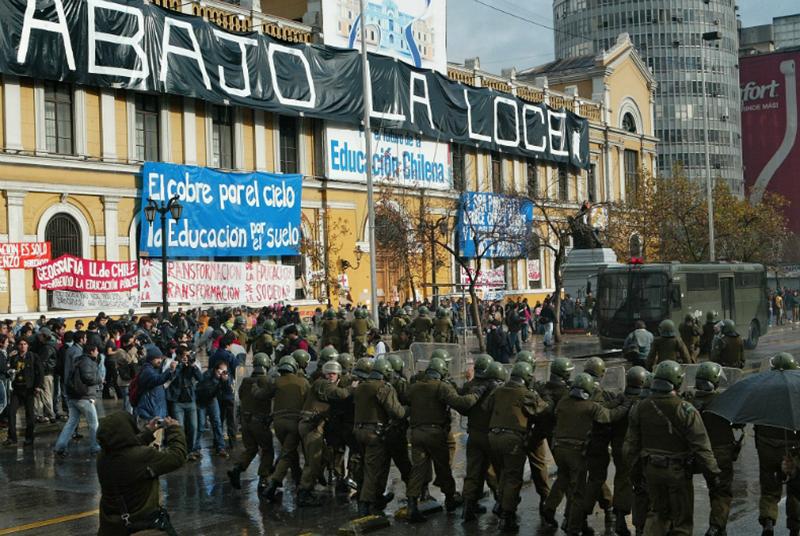
Yet, this very proletarianization is generating its own antithesis. The mass indebtedness and precarious future that unite students and adjuncts are forging new solidarities. The global student-led movements for debt abolition, divestment from fossil fuels and arms manufacturers, and solidarity with Palestine represent a nascent counter-politics that rejects the university's role as a factory for human capital and begins to repurpose its ruins as a site of blockade and demand.
The Subsidized Laboratory: Research as Corporate and State Capture
The research university, idealized through German models and American adaptations, presumed autonomy: investigation driven by curiosity, evaluation by peer community, dissemination through public channels. This autonomy was always partial—funding dependence, military application, commercial potential shaped research directions—but the post-1945 expansion of federal research funding in the United States and comparable systems elsewhere created space for investigation not immediately directed toward practical application. The contemporary reorganization of research funding has collapsed this space: the "basic research" that might generate unexpected discovery is displaced by "translational" research directed toward patentable outcomes; the long-term investigation that might address fundamental questions is displaced by project funding with deliverable timelines; the interdisciplinary collaboration that might generate novel approaches is displaced by disciplinary metrics that enable individual evaluation.
The corporate capture of university research proceeds through multiple mechanisms: direct funding for specific projects with intellectual property provisions favorable to sponsors; joint appointments that allow corporate researchers to claim academic affiliation; "entrepreneurship" programs that train students in startup formation rather than critical inquiry; and the "revolving door" that moves researchers between university and corporate positions, diffusing norms of confidentiality and proprietary restriction. The pharmaceutical and biotechnology sectors are most advanced in this capture, with clinical trials substantially conducted through university medical centers, with graduate training oriented toward industry needs, with research agendas shaped by profit potential rather than health priority.
The technology sector's capture is equally extensive but differently structured. Computer science and engineering departments function as talent pipelines and research facilities for dominant platforms: Google, Amazon, Microsoft, Meta, and their competitors fund research, recruit graduates, and shape curricula through advisory relationships. The "AI ethics" and "responsible innovation" programs that have proliferated serve legitimation function: addressing concerns that technology generates without constraining its development, producing discourse that can be cited without altering practice. The critical research that might challenge platform dominance is discouraged by funding dependence, career risk, and the institutionalization of "partnership" relationships that presuppose mutual benefit.
The state-directed dimension of research capture has intensified with geopolitical competition. The "national security" framing that justified military research funding during Cold War has been supplemented by "economic competitiveness" and "technological sovereignty" justifications that direct research toward state-identified priorities. The CHIPS Act, the Inflation Reduction Act, and comparable measures in other countries specify research areas—semiconductors, batteries, AI, biomanufacturing—that universities are encouraged or required to address. The "strategic" research that this generates is often classified or subject to export control, removing it from public circulation and academic evaluation. The university becomes facility of state-directed innovation rather than site of autonomous inquiry.
The global competition for "talent" that policy discourse emphasizes is competition for research labor that can be directed toward national priority. The American advantage in attracting international graduate students and researchers—historically substantial—has been eroded by visa restrictions, political hostility, and alternative opportunities in rising powers. Chinese, Indian, and other national systems have expanded research capacity and now retain or attract talent that previously flowed to American institutions. The competition for researchers intensifies the conditions that undermine autonomy: higher salaries, better facilities, and greater "freedom" are offered as recruitment tools, but the research direction is determined by funding source and national priority rather than investigator curiosity.
The University as Crisis Manager: Administering the Interregnum
A critical, contemporary function of the university is to produce the knowledge and personnel required to manage the systemic crises of our time without solving them. Schools of public health, sustainability institutes, climate policy programs, and centers for AI ethics are expanding not as sites of radical critique, but as laboratories for technocratic administration. Their role is to develop the tools for adaptation and mitigation within the constraints of existing power relations: climate models that assume continued growth, public health frameworks that accept pharmaceutical profit motives, AI governance that legitimizes corporate control. Similarly, the urgent, mission-oriented science required to address the climate crisis is funneled through the same capture, ensuring that "solutions" are those compatible with green growth and new markets, not those that challenge the logic of extraction. The university thus becomes an essential organ for governing the interregnum—producing the experts who will manage scarcity, police migration, and optimize decline—while systematically excluding knowledge that points toward systemic transformation.
The Proletarianization of Academic Labor
The transformation of academic employment parallels broader labor market trends but with distinctive features. The tenure-track position that guaranteed job security and research time has been displaced by contingent appointments: adjuncts, lecturers, postdoctoral researchers, and "visiting" positions that renew indefinitely without security. The proportion of tenure-track faculty in American institutions has fallen below one-third; the majority of teaching is conducted by contingent workers paid per course at rates that do not sustain middle-class existence. The "academic freedom" that tenure was designed to protect is meaningless for those without job security, whose continued employment depends upon student evaluation metrics and administrative favor.
The graduate training system functions as labor supply mechanism that generates oversupply. Doctoral programs recruit students who will conduct research and teaching at low cost, with implicit or explicit promise of eventual tenure-track employment that materializes for minority. The "adjunctification" of teaching is structural feature rather than temporary deviation: the same research productivity that doctoral training emphasizes is not required for teaching-intensive positions, while the teaching experience that such positions require is not provided by research-oriented doctoral programs. The mismatch generates "failed" academics who accumulate debt and credentials without employment that utilizes them.
The global restructuring of academic labor creates additional dynamics. The "branch campuses" that American and European institutions establish in Gulf states, China, and elsewhere export credentialing without autonomy: curricula determined by home institution, research restricted by host state, faculty without tenure protections or academic freedom guarantees. The "internationalization" that university marketing celebrates is labor arbitrage: hiring local faculty at lower cost, attracting fee-paying international students, while maintaining brand prestige of metropolitan origin. The knowledge production that occurs in such settings is constrained by censorship and self-censorship that make genuine inquiry impossible.
The metricization of academic performance—journal impact factors, citation indices, h-index rankings, grant income totals—generates gamification that distorts research toward quantity and away from quality, toward novelty and away from replication, toward collaboration with established figures and away from risk-taking with unknown colleagues. The "excellence" that evaluation frameworks claim to identify is substantially network position and resource access: the same research receives different evaluation depending on institutional affiliation and funding source. The evaluation systems function as disciplinary mechanisms that constrain possibility rather than as quality assurance that enables discovery.
The Nationalization of Knowledge and the Geopolitics of Research
The geopolitical competition between the United States and China has transformed academic internationalization into security threat. The "China Initiative" and comparable programs prosecuted researchers with Chinese connections for alleged espionage, generating chilling effect on collaboration and self-censorship among Chinese-American scholars. Visa restrictions, export controls, and research security protocols constrain the movement of people, ideas, and materials that academic inquiry requires. The "open science" that post-1945 research systems claimed to pursue is displaced by "controlled access" that national security frames as necessary protection.
The nationalization of research agendas extends beyond security to economic competitiveness. The "strategic sectors" that state policy identifies—artificial intelligence, quantum computing, biotechnology, clean energy—receive funding priority that crowds out other inquiry. The "global challenges" that international collaboration might address—climate change, pandemic preparedness, food security—are subordinated to competitive framing that treats knowledge as zero-sum resource. The cosmopolitan ideal of science as universal human endeavor is displaced by nationalist assertion that knowledge serves state power.
The European response attempts to navigate between American and Chinese models: maintaining "strategic autonomy" without complete decoupling, preserving research collaboration without security vulnerability, competing for talent without matching American or Chinese resources. The "European Research Area" and comparable initiatives achieve partial coordination but remain underfunded relative to ambition, fragmented by national priority, and constrained by fiscal rules that prevent investment scale that transformation would require. The European university system preserves elements of public financing and autonomy that American system has lost, but faces similar pressures toward financialization and capture.
The global South remains substantially excluded from research systems that generate and circulate knowledge. The "capacity building" that international programs claim to provide is insufficient in scale and inappropriate in structure: training that prepares researchers for Northern institutions rather than Southern needs, collaboration that extracts data and samples without local benefit, publication systems that require English language and expensive access fees. The "decolonization" of knowledge that some advocate requires transformation of institutional structures that colonialism established and that contemporary globalization perpetuates.
Intellectual Autonomy: Loss and Possible Reconstruction
The question that follows from this analysis is whether intellectual autonomy—the capacity for critical knowledge production independent of market imperative and state directive—can be reconstructed outside university structures, or whether its conditions were specific to historical moment that has passed. The university provided institutional support for autonomy: time without immediate productivity requirement, community of evaluation without market test, resources without direct accountability to funders. These conditions were always contested and partial, but their contemporary absence is qualitative change.
The alternatives that have emerged—think tanks, independent research institutes, online platforms, collaborative networks—replicate some university functions without others. Think tanks provide time and resources but with explicit policy orientation and funding dependence that constrains critical inquiry. Independent institutes achieve autonomy through endowment or subscription but at scale insufficient for comprehensive research. Online platforms enable circulation without institutional support for sustained investigation. Collaborative networks facilitate connection without stable organization. None fully replicates the university's combination of time, community, resources, and relative autonomy.
The "public intellectual" role that some occupy—writing for general audiences, engaging policy debate, participating in media—depends upon university position for credential and income, or upon alternative employment that enables discretionary time. The complete proletarianization of intellectual labor—the reduction of all knowledge production to waged employment with immediate accountability—would eliminate this role. The contemporary proliferation of "content creation," "influencing," and "thought leadership" represents not expansion of intellectual autonomy but its decomposition into market-responsive performance.
The reconstruction of autonomy requires institutional innovation that contemporary political economy prevents: public funding without state direction, collective organization without bureaucratic hierarchy, international collaboration without national subordination. The conditions for such innovation—political mobilization that demands knowledge as public good, social wealth that enables discretionary time, international solidarity that transcends competitive rivalry—are not presently achievable. The interregnum between institutional orders is characterized by loss of possibilities that previous structures enabled without replacement by equivalent alternatives. Yet, nascent forms are experimenting in the ruins: cooperative research collectives operating on mutual aid principles, free universities in occupied spaces, guerrilla pedagogy networks in digital commons. While they cannot replicate the old university's scale or resources, they prefigure a different logic of knowledge—communal, problem-centered, and divorced from credentialing.
Conclusion: Beyond the University
The university as we have known it is ending. The financialization that transforms students into debtors, the capture of research by corporate and state interest, the proletarianization of academic labor, and the nationalization of knowledge in geopolitical competition—these forces are not reformable aberrations but structural features of contemporary political economy. The nostalgia that some academics express for imagined past, the reform proposals that assume restoration of public funding and autonomy, the "resistance" strategies that seek to preserve existing arrangements against market pressure—all fail to engage the depth of transformation.
The question is what comes after, and whether what comes after can preserve or reconstruct the possibilities that the university, however imperfectly, enabled. The knowledge that contemporary society requires—understanding of ecological limits, of technological transformation, of geopolitical shift, of social possibility—cannot be produced through market mechanism or state directive alone. The collective intelligence that addressing such challenges requires cannot be generated through individual competition or hierarchical command. The university's decomposition thus entails loss that is not merely institutional but civilizational.
Yet, from the ruins, new forms of knowledge production may emerge. The cooperative, networked, and problem-centered approaches that nascent initiatives experiment with point toward different logic: knowledge as common good rather than individual investment, inquiry as collective endeavor rather than competitive achievement, autonomy as communal practice rather than institutional privilege. The reconstruction of intellectual autonomy requires not restoration of past forms but invention of new ones—forms that respond to contemporary conditions while preserving the possibility of critical knowledge. The interregnum is thus not merely ending of an institution but opening of a question: can knowledge serve humanity's collective flourishing in an era of systemic crisis, or will it be subsumed entirely by market and state power?
References
Organized by Analytical Themes
The Financialized Student: Debt and Credential Inflation
Claim: Student debt transforms education from public good into individual investment, producing disciplined neoliberal subjects and foreclosing political mobilization.
Suzanne Mettler — Documents the "submerged state" of higher education financing and its political effects. See Degrees of Inequality: How the Politics of Higher Education Sabotaged the American Dream (2014).
Elizabeth Tandy Shermer — Analyzes the historical development of student debt. See Indentured Students: How Government-Guaranteed Loans Left Generations Drowning in College Debt (2021).
Mitchell Stevens and Ben Gebre-Medhin — Examine higher education as "market development." See "Association, Accumulation, and the New Politics of Higher Education" (2016).
Caitlin Zaloom — Ethnography of student debt and family finance. See Indebted: How Families Make College Work at Any Cost (2019).
Wendy Brown — Analyzes "human capital" framing and neoliberal subject formation. See Undoing the Demos: Neoliberalism's Stealth Revolution (2015).
Michael Hudson — Analyzes debt as disciplinary mechanism and extraction. See Killing the Host: How Financial Parasites and Debt Bondage Destroy the Global Economy (2015) and work on debt peonage and the "tribute economy."
Research as Corporate and State Capture
Claim: University research has been reorganized toward patentable outcomes, national priorities, and corporate profit rather than autonomous inquiry.
Christopher Newfield — Documents the "corporate university" and research restructuring. See Unmaking the Public University: The Forty-Year Assault on the Middle Class (2008) and The Great Mistake: How We Wrecked Public Universities and How We Can Fix Them (2016).
Sheila Slaughter and Larry L. Leslie — Analyze "academic capitalism" and research commercialization. See Academic Capitalism: Politics, Policies, and the Entrepreneurial University (1997) and Academic Capitalism and the New Economy: Markets, State, and Higher Education (2004).
Marc Bousquet — Examines the "waste product of graduate education" and labor exploitation. See How the University Works: Higher Education and the Low-Wage Nation (2008).
Jennifer Washburn — Documents corporate-university partnerships and their consequences. See University, Inc.: The Corporate Corruption of Higher Education (2005).
Daniel S. Greenberg — Analyzes the "politics of pure science" and its transformation. See The Politics of Pure Science (1967, expanded 1999) and Science for Sale: The Perils, Rewards, and Delusions of Campus Capitalism (2007).
The University as Crisis Manager
Claim: The university produces knowledge and personnel to manage systemic crises without solving them, excluding transformative alternatives.
Bruno Latour — Analyzes the "modern constitution" and its failure to address ecological crisis. See We Have Never Been Modern (1991) and Down to Earth: Politics in the New Climatic Regime (2018).
Ulrich Beck — Examines "risk society" and expert management. See Risk Society: Towards a New Modernity (1986) and World at Risk (2007).
James Ferguson — Analyzes "anti-politics" and technocratic development. See The Anti-Politics Machine: "Development," Depoliticization, and Bureaucratic Power in Lesotho (1990).
Timothy Mitchell — Examines "carbon democracy" and expert knowledge. See Carbon Democracy: Political Power in the Age of Oil (2011).
Michael Hudson — Analyzes how economic expertise legitimizes existing power relations. His critique of "junk economics" and the role of trained economists in obscuring structural transformation informs the analysis of crisis management.
The Proletarianization of Academic Labor
Claim: Tenure-track employment has been displaced by contingent appointments, generating oversupply and metricized evaluation that constrains possibility.
Gary Rhoades and Sheila Slaughter — Analyze academic labor markets and restructuring. See "Academic Capitalism in the New Economy: Challenges and Choices" (2004) and related work.
Frank Donoghue — Examines the "last professors" and adjunctification. See The Last Professors: The Corporate University and the Fate of the Humanities (2008).
Sarah Brouillette — Analyzes creative and academic labor under neoliberalism. See Literature and the Creative Economy (2014) and "Academic Labor, the Aesthetics of Management, and the Promise of Autonomous Work" (2013).
Stefan Collini — Critiques marketization of British universities. See What Are Universities For? (2012) and Speaking of Universities (2017).
Henry Giroux — Analyzes the "corporate university" and its pedagogical consequences. See The University in Chains: Confronting the Military-Industrial-Academic Complex (2007) and numerous subsequent works.
The Nationalization of Knowledge and Geopolitics
Claim: Academic internationalization has been transformed into security threat, with research directed toward national competitiveness rather than universal inquiry.
John Krige — Examines "techno-nationalism" and American hegemony. See American Hegemony and the Postwar Reconstruction of Science in Europe (2006) and Sharing Knowledge, Shaping Europe: US Technological Collaboration and Nonproliferation (2016).
Denis Fred Simon and Cong Cao — Analyze China's scientific rise and international dynamics. See China's Emerging Technological Edge: Assessing the Role of High-End Talent (2009).
Caroline S. Wagner — Examines the "new invisible college" and global science. See The New Invisible College: Science for Development (2008).
Michael Hudson — Analyzes how Cold War research funding structured academic disciplines and continues to shape national security framing of knowledge production. His work on the military-industrial complex and its academic extensions informs this analysis.
Intellectual Autonomy and Alternative Knowledge Production
Claim: The university's institutional support for autonomy has eroded, with alternatives replicating some functions without full replacement.
Pierre Bourdieu — Analyzes the "field" of cultural production and intellectual autonomy. See The Rules of Art: Genesis and Structure of the Literary Field (1992) and Homo Academicus (1984).
Edward W. Said — Examines the "public intellectual" role and its possibilities. See Representations of the Intellectual (1994).
Stefano Harney and Fred Moten — Propose "the undercommons" as alternative to university capture. See The Undercommons: Fugitive Planning & Black Study (2013).
Massimo De Angelis and Harriet Fraad — Analyze "commons" and cooperative production. See work at The Commoner and related publications.
Silvia Federici — Documents autonomous knowledge production in social movements. See Caliban and the Witch (2004) and work on "feminism and the politics of the commons."
Student Movements and Counter-Politics
Claim: Proletarianization is generating new solidarities and movements that repurpose university ruins for blockade and demand.
William H. Chafe — Historical analysis of student movements. See American Odyssey: The United States in the Twentieth Century (2006) and work on civil rights and student activism.
Jeremy Varon — Examines 1960s student movements comparatively. See Bringing the War Home: The Weather Underground, the Red Army Faction, and Revolutionary Violence in the Sixties and Seventies (2004).
Nick Mitchell — Analyzes "debt collective" and student organizing. See work on Strike Debt and debt abolition movements.
Astra Taylor — Documents debt resistance and democratic renewal. See The People's Platform: Taking Back Power and Culture in the Digital Age (2014) and Democracy May Not Exist, but We'll Miss It When It's Gone (2019).
Intellectual Tradition and Overall Framing
The text's overarching framework is most directly informed by:
Immanuel Wallerstein (World-Systems Analysis) — The concepts of structural crisis, the collapse of institutional orders, and the interregnum between hegemonic systems. See The Modern World-System (4 vols., 1974-2011) and World-Systems Analysis: An Introduction (2004).
Antonio Gramsci — The analysis of "organic crisis," the role of intellectuals, and the "interregnum" where "the old is dying and the new cannot be born." See Selections from the Prison Notebooks (1929-1935, edited and translated 1971).
Max Weber — The analysis of bureaucracy, rationalization, and the "disenchantment" of intellectual vocation. See "Science as a Vocation" (1917) and Economy and Society (1922).
Thorstein Veblen — The critique of "higher learning in business" and the "captains of erudition." See The Higher Learning in America: A Memorandum on the Conduct of Universities by Business Men (1918).
Michael Hudson — Synthesizes classical political economy and contemporary finance to analyze the dynamics of debt, the transformation of public goods into extractive opportunities, and the role of ideological institutions in legitimizing inequality. His work on the financialization of the economy, the "tribute economy" of rent extraction, and the impossibility of reform within financialized structures provides essential grounding for the text's assessment of the university as terminal crisis. His analysis of how trained expertise serves power rather than truth informs the treatment of crisis management and the foreclosure of transformative knowledge.
Jean-François Lyotard — The analysis of "postmodern condition" and the transformation of knowledge. See The Postmodern Condition: A Report on Knowledge (1979).
Bill Readings — The critique of "university in ruins." See The University in Ruins (1996).
Alvin W. Gouldner — The analysis of the "new class" and intellectuals. See The Future of Intellectuals and the Rise of the New Class (1979).
Want to stay informed about global economic
trends?
Subscribe to our newsletter for weekly analysis and insights
on international politics and economics.